



February 9, 2010
Blog
 >Latest Posts:
OH HENRY | Greg Henry MD
ACLS: Close the Drug Box Want to shave health care costs? Start with the low hanging fruit like ACLS.
Comments (25)
Latest Headlines
NIGHT SHIFT | Mark Plaster MD
Necessary Tests
"No, the doctor never pushed on my stomach. She just talked to me. Doctors don’t really listen to you after 70."
Subscribe to the epmonthly RSS feed 
 
Featured Classified
Virginia: Richmond - EMERGENCY MEDICINE OPPORTUNITY. Physician Owned, Physician Run Group. A premier physician-owned, physician-run group dedicated to providing the best c...

FPSS slide image

Snacks That Help Not Hinder

To vend or not to vend... that is the question

FPSS slide image

Haiti Relief: From the Ground

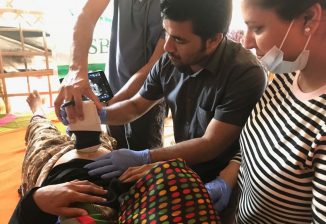
Mark Plaster reports: We are seeing a stabilization, but there is a mounting need for follow-up care.

FPSS slide image

Rethinking Resuscitation

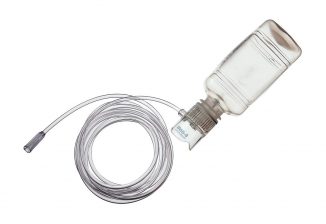
Is CPR effective? Can ice save a life?

FPSS slide image

30 Minutes with Dr. Coburn

He’s known for his opposition to earmarking and has taken a strong stance against the current health care reform bill. Read why...

FPSS slide image

Can EPs Fix the Helicopter EMS System?

DEADLY RESCUE is “calling for the chopper” worth the risk?


The Haiti Relief Effort from the ground

Feb 4: "Coming Home"

EPM's executive editor, Mark Plaster, arrived in Haiti on January 24th to assist in the relief effort. This is his account.    


February 4:  Coming Home, one of the hardest decisions of my life

Two days ago I walked into the courtyard of CDTI (the hospital where we had been working for the past week) and for the first time since my arrival it appeared empty. It wasn't, of course. There were still ten large tents with eight patients in each plus many more tents where other people were waiting to go to other locations or family members of patients were staying. But the courtyard was, for the first time, not congested with patients with crushed limbs, infected wounds, and burns waiting to go to surgery.  The hallway leading to X-ray, usually jammed with injured people, was empty. I got our driver and Brother Jim (our wonderful Jesuit brother) to go with me to make another sweep of any refugee camps that we came across to see if there were yet more injured waiting to be connected to definitive care.  As expected, we encountered hundreds of people requesting minor care – all the same problems that clog ERs back home – but there were few if any remaining untreated victims of the earthquake.  Moreover, larger organizations such as the Red Cross, Doctors Without Borders, and the UN were making their presence known.  And in some cases, they made it clear that they did not need or want assistance from small NGO groups like ours.  So, despite my original willingness to stay much longer, it appeared that I was no longer needed. I thought of all the work waiting for me at home and then I paused, taking a deep breath and hoping for some divine guidance. And then, reluctantly, I decided to leave Haiti.  

Even as I made the decision, I saw the faces of some of my new friends who planned to stay longer, and felt that I was betraying them.  But once the decision was made, I committed to it.  Loading my pack to go home, I tried to leave anything and everything that I could.  Everyone promised to stay in touch, but I knew it was possible that I would never see some of them again.  I trudged to the area of people waiting for humanitarian flights out on military planes.  The ICE inspector saw my military ID, my Marines T-shirt and Navy cap, but was confused by my five-day beard and the filthy clothing.  The X-ray machine picked up the K-bar knife that I carry everywhere buried deep in my rucksack.  The inspector told me he would have to take it from me.  There was no way I was giving up a knife I had carried through two combat deployments.  I called my friend to return to the airport to pick up my knife.  The ICE inspector interrupted with a whisper, "Forget it, just bury it in your pack." Finally making it to the flight line I realized that the body scanner had missed the equally large bandage/tissue knife in my pocket.  Oh well.
 
 
February 1: Returning Home
 Made a tough decision to return home. The hospital and surg are way down and the big organizations are stepping up. The biggest medical issues now are follow-up. There are thousands of amputees and people with fixation devices that will need to be removed in 8-12 weeks.
 
I talked to a man who said that a funeral director, an LPN, and a dentist were running the CCU at the university hospital. Doctors and nurses finally showed up. Before that they would have 4 IV bags for 30 patients, no BP cuff, no lights at night and no pain meds. The staff nurses were afraid to work in the building at night. It turns out that John Travolta flew them down. This bunch are a part of the Scientology Church.
 
 
January 30: When does it end?
 
Most of the team is headed home today but it looks like I will stay to help run the hospital in Sacre Couer, where we have been working. I anticipate that I will stay no more than a month. It could be less, but no more.
 
I was called to pick up three bodies and found that all three had their hands bound with the same tape. Executed. Left in the street. Their pants were pulled down, to shame not rape.
 
It looks like USA Today may send a crew down to do a story, and the USNS Mercy is arriving soon. The weather is beautiful but rains will start in March. Another disaster looming. When does it end, Haiti? More later. Got to get back to work.
 
 
January 29: In search of the few
 
It looks like Team Rubicon will be heading home within the next few days. The emergency is over, but Haiti is an ongoing disaster. It is hard to walk away. Big agencies, like MSF, Red Cross and the UN are here, but so many will fall through the cracks. So many helpless. So many fatherless. So many poor. I am heartbroken.

 
Caring for the dead in Sacre Coeur 
 
January 28: Potter's Field
 
Mark Plaster (R) and Father Jim Boynton ride through Port-au-Prince

When I came into the courtyard of the mission last night it was after dark and everyone was starting to slow down. I approached my new best friend Dr. Michelle, a Pod from Miami, and leaned in to ask a favor. "Can you take a little girl with her finger pulled off," I whispered? She leaned over and quietly answered, "Can you get rid of two dead bodies?"
 
January 27: We're seeing a stabilization, but what about follow-up?

"We are right down town in Port-au-Prince today; pretty much every building around us is destroyed. The only thing still standing near us is a church, which is currently housing a local boy scout troop.
 
The effort is starting to see a logical transition right now. At the clinics you’ll get 10 to 20 people walking in with soft tissue injuries – big gaping wounds that are infected – but fewer and fewer people are needing amputations and surgery. I did get a call from a guy in an outlying area who needed a hand surgeon, which we arranged. Other than that, we’re seeing a stabilization. 


Yesterday we just drove down the road and just found an open area where we could set up a triage station. We pulled out a tarp, some line to hold everybody back, and just let people come through. We laid out our meds on a table and then just worked through the crowd. Most of the injuries were pretty minor but a couple of them were major, broken bones and such. We probably saw 3 or 4 major cases that morning.Our team is going to places that haven't had doctors yet. A man told us that a week ago he’d told the UN that they needed help out here but no one had come out yet. 
January 25: Getting to Work in Port-au-Prince
 
 
Rubicon leaders Jake Wood and Garry Cagle in Port-au-Prince
 
“When we got off the plane, Port-au-Prince was almost completely black. There is almost no light here. We unloaded the aircraft ourselves and it was just a giant scramble getting all the bags off. We had bags in seats and the inside of the aircraft was total chaos. It was shocking that we got all our gear off. We were met by a team Rubicon leader named Jake Wood, a 6' 5" ex-marine sniper who was now a medic. On his own, Jake had decided to come down to Haiti and help out. He’d grabbed a couple friends – some people he didn't even know – grabbed some sleeping bags and flew to Santo Domingo, DR. They rented a car and just drove in to Port-au-Prince. They made a connection with a Jesuit Mission and just camped out in the mission yard and started seeing patients as fast as they could. They were cutting off limbs in the field . . . it was pretty chaotic when they first arrived. 
 
January 24, 2010
"Got the final word from the Navy last Friday that there was no further info about deployment on the USNS COMFORT. I decided to go instead with Team Rubicon out of Fayetteville, NC (pictured, packing their bags with medical supplies).  Met the team on Saturday morning. All former military with lots of contacts with WHO, UN, and US govt.  They got a plane by going through Gov Rindell to Rhaim Emmanuel.  In the space of a week, Team Rubicon has gone from a rag tag group of guys to a 501-c-3 organization recognized by USAID, WHO, and the US gov’t. We left for Port au Prince yesterday afternoon at 13:30. I’m one of two emergency physicians. The others are paramedics, firefighters, and a nurse."
"Driving down the road on Saturday I got that lonely feeling that I was leaving what I knew to something I didn’t.  I kept kicking myself that I had waited so long on the Navy.  The rescue effort has been officially ended and the recovery phase begun.  I had to confront the feelings in myself that I wanted to be a rescuer. But I finally had to tell myself that I am just willing to play the role that God has given me."


January 22, 2010
Quote of the Week First-hand account from James Lea of haitiearthquake.tv

“My team has worked 17 hours today. The only thing they asked for was more patients.” – LCDR Dan D’Aurora, director of CASREC onboard the USNS Comfort, in his office after the last of over 80 trauma patients had been brought through his department on the first day on station in Haiti.

 
 People, if you have disdain for our US military, you need to come here. You will change your minds.
 
January 21, 2010 

 
January 20, 2010
 
USNS Comfort treats first patients flown in from Haiti while still in transit. Naval hospital ship set to arrive today. 
 
First-hand account from James Lea of haitiearthquake.tv
"After being flown via helicopter from the USS Carl Vinson, the first two patients arrived aboard the USNS Comfort late Tuesday evening. They were quickly brought from the flight deck to CASREC and the Medical Staff quickly went to work. The younger, a six year old boy named Lionel, presented with a pelvic crush injury that affected his bladder and urethra. Although he was alone and badly injured, he communicated with Hospital Corpsman Yves Henry and gave the “thumbs up” as the medical team continued to assess his injuries. Fifteen feet away, another team worked calmly, yet quickly to prepare a twenty-year-old man with a skull and possible cervical spine injury. X-Rays were taken and the man was whisked into the CT scanner. Mere yards away, two surgical teams stood ready to bring both patients into the operating room, if needed. Tonight showed that all the preparation and drill has paid off handsomely. The atmosphere in CASREC was strangely calm. It was as if these doctors, nurses and corpsmen had been working together for years. If tonight’s experience is an indication of things to come, the people of Haiti have a bit of hope just a few hundred miles off their coastline.
We arrive later today."
-James Lea of haitiearthquake.tv
 
January 17, 2010
  • In the newly established hospital in the Carrefour district, an MSF surgical team carried out 90 operations within 24 hours of getting the theatre usable. The surgical team at Choscal hospital has completed around 90 operations since beginning work there. Another team carried out 20 in a converted shipping container. 
  • More capacity is on its way, but the arrival of a twin-theatre inflatable hospital has been delayed because one of the planes carrying it did not get permission to land at Port-au-Prince airport on Saturday and was re-routed to the Dominican Republic. That plane was unloaded earlier today and its cargo is being trucked into Haiti. A plane carrying the other half of the hospital did land this morning in Port-au-Prince, but MSF is still concerned that the delivery of vital supplies are still being delayed.
  • Despite the transport problems, MSF has managed to get in more than 100 extra international staff to help the teams who were working in Haiti before the earthquake. The specialists include surgeons, anesthetists, nephrologists and psychologists. Many had to come by road from the Dominican Republic but MSF has managed to get four cargo planes carrying staff and supplies into Port-au-Prince since last Wednesday.
  • The teams on the ground say that conditions are certainly not improving yet and that the streets are full of desperate people. The lack of food and clean water is causing further stress.
  • MSF is still trying to get a full accounting of the whereabouts of its Haitian staff, knowing that some have not survived the quake.
 

QUICK-CLICK CME
only $10 per credit


Learn how to